

Buying a Waterfront Home in Camano Island, Washington? Read This Before You Fall in Love With the View.
There is something magical about walking into a waterfront home.
The sound of the waves. Eagles flying overhead. Watching the sunset reflect across the water. Coffee on the deck. A private beach just steps away.
It’s easy to fall in love.
But after recently helping buyers get under contract on a beautiful low-bank waterfront home on Camano Island, I was reminded just how different buying waterfront property is from buying a traditional home.
The home itself is only part of the purchase.
The shoreline is just as important.
If you’re considering buying a waterfront home on Camano Island, Snohomish County, Warm Beach, Stanwood, Tulalip, or anywhere along the Puget Sound, here are the biggest things you should know before making an offer.
1. The Bulkhead (Seawall) Can Be One of the Most Expensive Parts of the Property
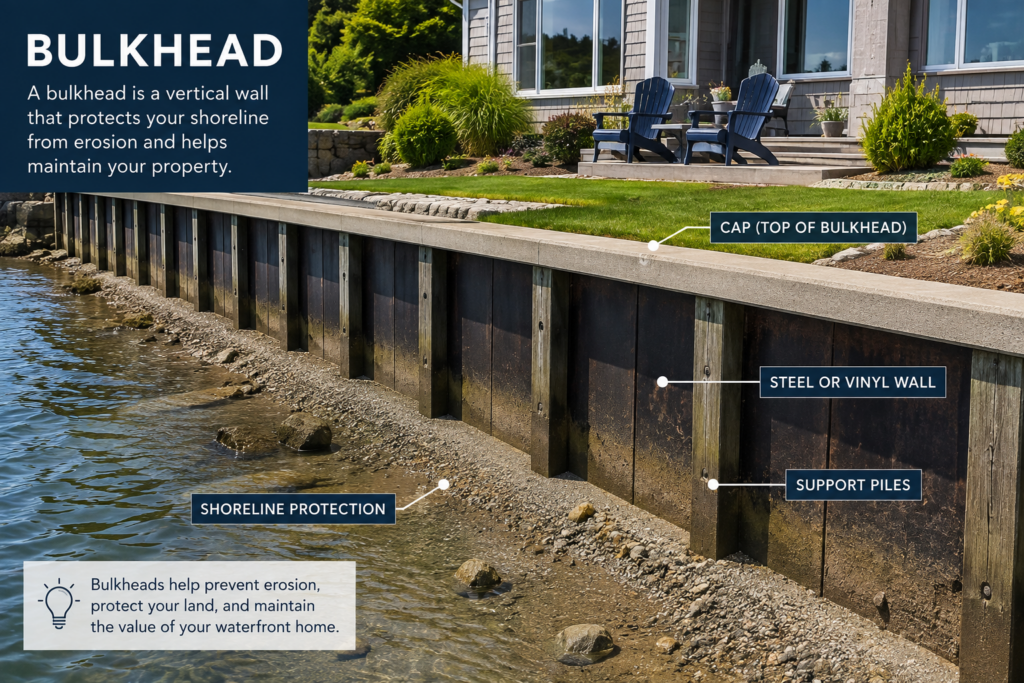
One of the biggest surprises for waterfront buyers is learning how expensive shoreline protection can be.
Many waterfront homes have:
- Bulkheads
- Seawalls
- Rock revetments
- Beach access stairs
- Retaining walls
These structures protect both the property and the shoreline from erosion.
During our recent home search, we discovered several homes where aging bulkheads and stairs would likely need major repairs or complete replacement.
Those projects aren’t inexpensive.
Even more importantly…
Replacing or repairing shoreline structures usually requires permits and environmental approval.
Because these homes sit on protected shorelines, the work is much more regulated than replacing a fence or building a deck.
The home my buyers ultimately chose already had a newer bulkhead and shoreline improvements completed, which removed a significant future expense and gave them much greater peace of mind.
2. Shoreline Permits Matter More Than You Think
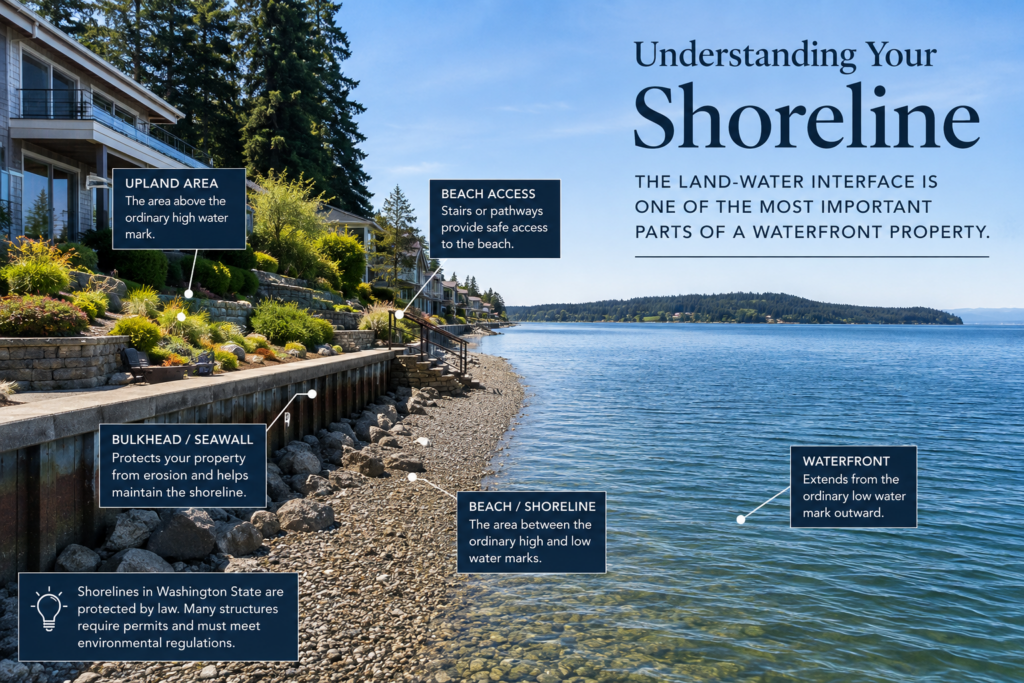
Many buyers assume they can simply replace stairs, improve beach access, or add shoreline protection later.
Unfortunately, it isn’t always that simple.
Washington has strict shoreline regulations designed to protect marine habitats, salmon, and the natural shoreline.
Before purchasing, it’s important to understand:
- Were the shoreline improvements permitted?
- Are permits transferable?
- Were repairs completed correctly?
- Are there any outstanding shoreline violations?
- Will future repairs require new permits?
These are questions many buyers don’t even realize they should ask.
3. Bank-Low Waterfront Is Highly Desirable—but Still Needs Evaluation
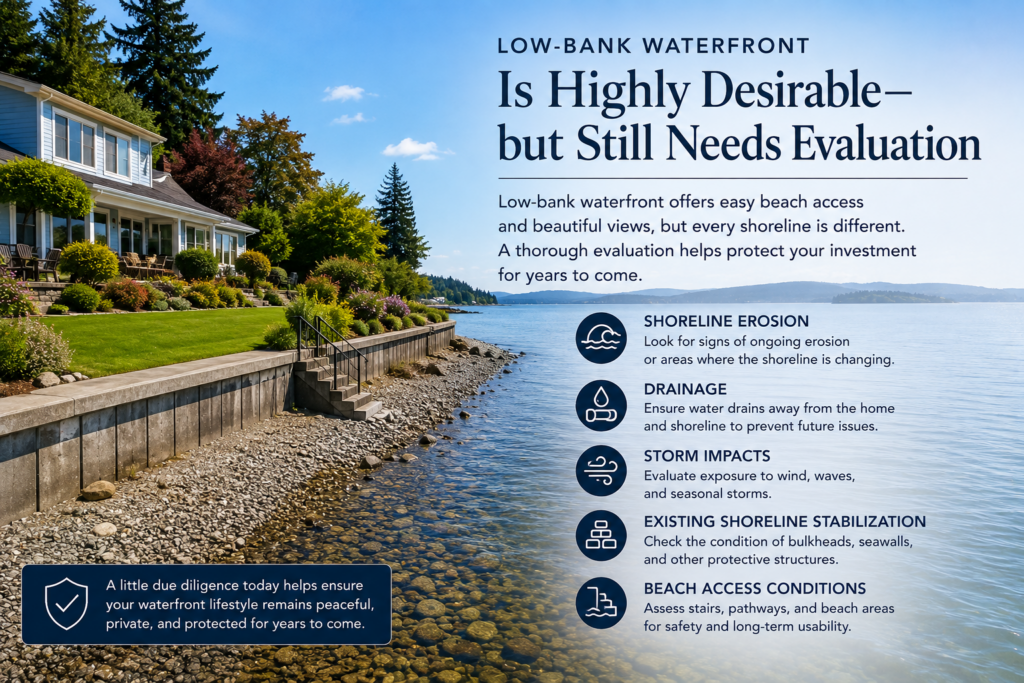
One reason buyers love low-bank waterfront is easy access to the beach.
A listing might advertise:
80 Feet of Low-Bank Saltwater Waterfront
That sounds incredible—and often it is.
But low-bank properties should still be evaluated carefully for:
- Shoreline erosion
- Drainage
- Storm impacts
- Existing shoreline stabilization
- Beach access conditions
Not every stretch of shoreline behaves the same.
4. Know Your Shoreline Rights
Many buyers assume owning waterfront automatically means they own everything to the water.
In Washington, shoreline ownership can vary depending on the property.
Questions worth asking include:
- Where does the property line actually end?
- Are there shared beach rights?
- Are there easements?
- Can neighbors legally access parts of the shoreline?
- Are there restrictions on improvements?
Understanding these details before closing can prevent surprises later.
5. Flood Insurance Isn’t Always Required—But You Should Know the Risk
Not every waterfront home requires flood insurance.
Some sit outside designated flood zones.
Others do not.
It’s important to review:
- FEMA flood maps
- Insurance availability
- Insurance costs
- Previous flood history
This can affect both your monthly costs and future resale.
6. Wells, Septic Systems & Waterfront Can Create Extra Due Diligence
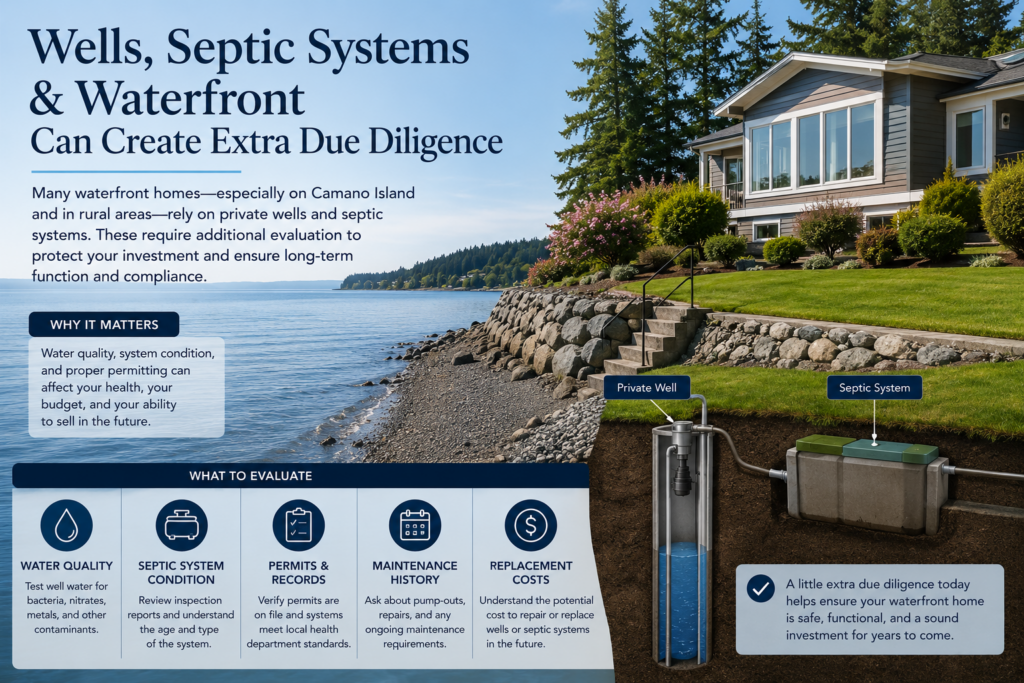
Many waterfront homes, especially on Camano Island and in more rural areas, have:
- Private wells
- Septic systems
- Water quality testing requirements
Your inspections should go beyond the home itself.
Testing water quality, reviewing septic records, and understanding system age can save thousands later.
7. Beach Access Stairs Can Become a Major Future Expense
One thing we saw repeatedly during our search was aging beach stair systems.
Saltwater, weather, and constant exposure take a toll.
Questions to ask include:
- How old are the stairs?
- Have they been repaired?
- Were permits obtained?
- Are replacement parts available?
- Will future repairs require engineering?
A beautiful staircase to the beach can also become one of the largest maintenance items on the property.
8. Waterfront Homes Have Different Maintenance Needs
Saltwater is hard on nearly everything.
Expect more frequent maintenance on:
- Windows
- Exterior paint
- Decking
- Metal fixtures
- Roofing
- Railings
- Outdoor lighting
Planning for ongoing maintenance is simply part of waterfront ownership.
9. Not Every Inspection Company Specializes in Waterfront Homes
This is one of the biggest reasons I recommend working with professionals who have experience with waterfront properties.
A standard home inspection is essential, but depending on the property, buyers may also want to evaluate:
- Bulkheads and seawalls
- Docks or piers
- Shoreline stabilization
- Drainage
- Wells
- Septic systems
- Geotechnical concerns for bluff properties
- Flood considerations
Having the right experts involved can make all the difference.
10. Work With a Realtor Who Knows What Questions to Ask

Waterfront homes offer a lifestyle that’s hard to match—from breathtaking sunsets and peaceful mornings by the water to the simple joy of having the shoreline in your own backyard. They’re some of the most special properties you can own, but they also come with unique considerations that don’t exist with a traditional home purchase.
After recently helping buyers purchase a beautiful low-bank waterfront home on Camano Island, I was reminded that buying waterfront is about so much more than falling in love with the view. It’s about understanding the shoreline, evaluating the condition of the bulkhead and beach access, reviewing permits, and identifying potential maintenance costs before they become your responsibility.
In this case, my buyers found the best of both worlds: an incredible waterfront setting and a property where major shoreline improvements had already been completed. That combination gave them confidence they were investing in not only an amazing lifestyle, but a home that was well cared for and ready to enjoy.
Helping buyers look beyond the beauty and understand the details is one of the most valuable parts of my job. My goal is to make sure my clients can enjoy everything waterfront living has to offer—without unexpected surprises after closing.
Thinking About Buying a Waterfront Home?
Whether you’re dreaming of waterfront living on Camano Island, Snohomish County, or anywhere along the Puget Sound, I’d love to help you navigate the process with confidence.
Waterfront properties require a different level of due diligence, and having an experienced local Realtor on your side can help you avoid costly surprises while finding the right home for your lifestyle.
Helping people in Camano Island and Snohomish County navigate life’s biggest transitions—with a home that fits the next chapter, not the last one.
Let’s talk about your waterfront goals and build a plan that makes buying your dream home feel exciting—not overwhelming.
See Other Recent Posts from Tracie Diemert:
- Marysville, WA Real Estate Market Update – September 2026
- Things to Do in North Snohomish County – September 2026 Events
- Downsizing in Marysville, WA
- 5 Things Marysville, WA Homeowners Should Know Before Selling Their Home
- 10 Things to Know Before Buying a Waterfront Home in Washington | Camano Island Waterfront Guide